The Only Thing We Actually Need This Holiday Season
Thanksgiving is complicated. It’s built on a violent, whitewashed history: colonization, displacement, erasure. And we need to reckon with that. But we’re also allowed to redefine what we do with a day that’s supposed to be about gratitude. We can reimagine the rituals. We can reclaim the meaning.
Maybe especially now. Because people are aching for connection in ways we’re not talking about enough. Corporate America would rather keep us distracted. They want us filling carts, clicking affiliate links, numbing out with TikTok ads, pretending that Amazon deliveries count as self-care. Every screen is screaming BUY MORE STUFF, but the truth is, we don’t need more things.
We need each other.
This past year made that truth impossible for me to ignore.
When my dad was alive, this tough, proud, 88-year-old Irish man, affection wasn’t his love language. I remember climbing onto his lap after watching some old Shirley Temple movie, The Little Princess, thinking - this must be what fathers and daughters do. He looked at me and said, “Don’t put your hands on my face. What the hell are you doing?”
So I never did it again.
We weren’t a hugging family. We weren’t a touchy family. But in the final years of his life, after my mom died, he let the loneliness show. He talked about it often, how no one hugged him anymore, how quiet his world had become, how much he missed being close to someone. Being seen.
And when I visited him, I hugged him. I kissed his forehead. I sat next to him on the couch. I probably hadn’t kissed my father since I was a child, but I did it because it mattered to him. When he died, what gutted me wasn’t just the loss, it was remembering how he said, out loud, in those small moments of vulnerability: “I’m lonely.”
My sister did everything she could: dinners, errands, care, and presence. But still, his world shrank. His body failed him. His pride trapped him. And his loneliness outpaced his ability to fix it.
And then, last week, it happened again.
I was in Wisconsin, finishing a solo week at my little cottage, deep in work, deep in quiet, deep in my own company, which I actually love. On the last day, I stopped by a friend’s farm to toss some garbage. At that same moment, an elderly man from down the road pulled in.
His wife had died during COVID. He’s 88. Lives alone. Keeps it simple. We talked about his life; his lady friend he has dinner with sometimes, her job 25 miles away, how companionship doesn’t have to be romantic to be deeply human.
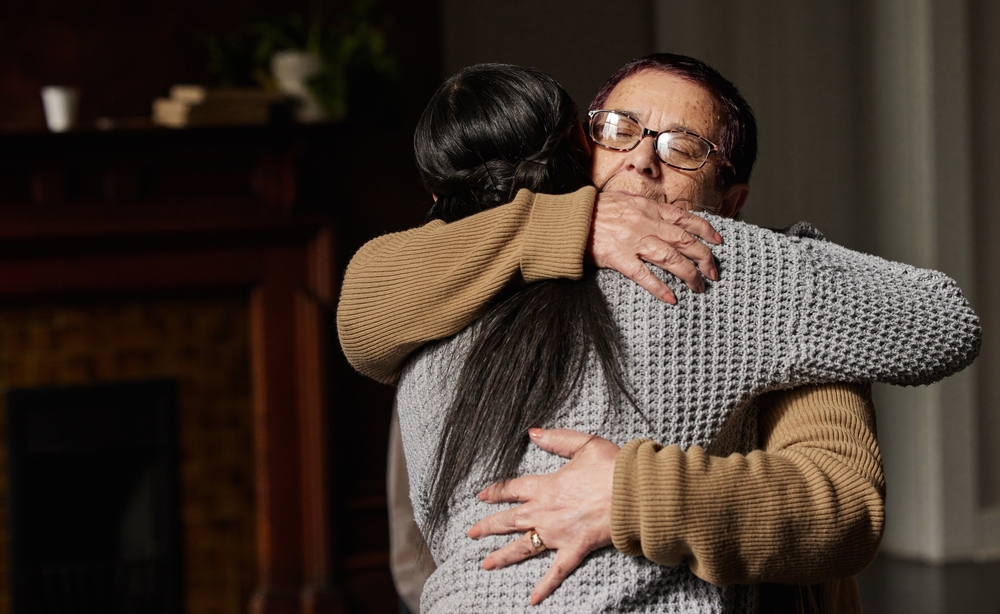
Then he looked at me, eyes welling, and said he hadn’t been kissed in years. Except once, at a memorial. And then he asked if I’d give him a hug. So there we were: two strangers on a dirt road in rural Wisconsin. Hugging. And I started to cry. Because I understood, in my bones, how many people are quietly starving for connection. And it’s not just older men.
-It’s the friend with the traveling spouse. -It’s the parent of grown kids. -It’s the twenty-somethings drowning in group chats but starved for real closeness. -It’s the people unraveling behind curated Instagram lives.
Loneliness is killing us.
The polarization. The isolation. The “everyone for themselves” economy. It’s all driving us deeper into emotional bunkers.
And here’s the tragic truth:
Loneliness is a public health issue. But we don’t treat it like one.
Our systems weren’t built for the tender parts of being human, like grief, aging, isolation, and disconnection. And now, some of the programs that try to meet those needs: SNAP, housing assistance, and supplemental care are being gutted. Cutting them doesn’t create “fiscal responsibility.” It creates casualties. It accelerates exactly what I watched happen to my father:
-Smaller worlds. -Deeper isolation. -Long, slow declines that didn’t have to happen.
But it doesn’t have to be this way.
Look at Finland. They appointed a government official specifically to fight loneliness. They created “Circle of Friends” - structured, small-group connection programs for older adults. The outcomes? Better mental health. Stronger community. Real, lasting relationships.
Imagine that: a government treating loneliness as a public health issue and actually doing something about it!
We could do that. We should do that. But right now, we’re not. So until our leaders catch up, it’s on us. This holiday season, I’m asking - begging - that we stop treating December like a shopping Olympics. Don’t buy me anything. Don’t buy people more stuff unless they actually need something.
-Give people your time. -Give people conversation. -Give people touch, if they want it. -Give people space to be seen. -Give people invitations to walk, to rest, to create, to be human.
Because we can’t save generosity for December. We can’t save community for the calendar-sanctioned days. And loneliness doesn’t take a holiday.
The hard truth is: we’re all going to be old someday. We’re all going to need someone to look us in the eye and say, “You matter. Stay with us.” So we have to build the habits now.
-Be the person who notices. -Be the one who asks the second question. -Be the one who gives the hug when it’s requested. -Be the one who resists the pressure to consume. And chooses to show up instead.
This is what I’m carrying into Thanksgiving. Not tradition. Not consumerism. Not performative holiday crap. Just a quiet rebellion of presence.
Because the only thing we actually need this season… is each other.
December holds two dates that don’t get nearly enough attention in the U.S.:
• December 3: International Day of Persons with Disabilities
• December 10: Human Rights Day
We don’t often talk about these days in the same breath as the holidays, but maybe we should. Because at their core, these days are about something profoundly human, the right to dignity, to agency, to inclusion. The right to be seen and cared for in a world that often only values productivity, perfection, and speed.
And that brings us back to loneliness. When I talk about aging parents, isolated elders, or heartbreaks unfolding behind closed doors, I’m also talking about disability. I’m talking about the slow loss of mobility. The shrinking of independence. The ways bodies and systems fail. And how often we look away, rather than lean in.
Disability and aging are not separate experiences. They're often deeply intertwined, and just as invisible. When we design workplaces, communities, technologies, or even holiday rituals that ignore this truth, we leave people behind. We design for the ideal user, not the whole human.
International Day of Persons with Disabilities reminds us that access is a right, not a luxury. And Human Rights Day insists that inclusion, dignity, and care shouldn’t be conditional, not on youth, not on productivity, not on how “easy” someone is to accommodate.
So if you’re thinking about presence this season… -Think about who’s missing from the table. -Think about who can’t get there. -Think about who stopped being invited.
Because belonging isn’t seasonal, it’s not decorative. And it’s not optional. It’s human.
Thanksgiving drama incoming? This podcast episode is a masterclass in critical thinking. From defusing debates on tariffs to dismantling the "Social Security is a Ponzi scheme" nonsense — it’s got tools. But the real mic-drop moment? Around minute 29, where Kathryn Edwards delivers the most intelligent, humane, and logically bulletproof response to the trans women in sports debate I’ve ever heard. Save it, share it, memorize it.
Take Me To Your Leaders
Early next year I’m speaking in Florida, Arizona, NYC, and Northern Minnesota (yes, I contain multitudes).I still have open dates for 2026, and I’m looking for stages, boardrooms, summits, and leadership teams who want the future of work (and life) delivered with clarity, humor, and a little fire. If your people need someone who can decode AI, rebuild culture, and wake the room up, I’m booking now!My website is updated with new content! You can see it at nancylyons.com.Or hit reply. Let’s make something amazing happen together!
“When you have nobody you can make a cup of tea for, when nobody needs you, that's when I think life is over.” - Audrey Hepburn